Key Takeaway:
Tree removal in Atlantic and Cape May Counties typically costs between $450 and $2,000+, depending on the tree’s size, location, condition, and whether special equipment like a crane is needed.
Emergency removals, stump grinding, and complex jobs may increase the price.
Hiring a licensed, insured, and local expert like Yoos Tree Service ensures safety, faster service, and better long-term value.
If you’ve ever looked at a leaning tree near your house or a dying oak crowding your driveway, you’ve probably wondered: How much does it cost to remove a tree in Atlantic or Cape May County?
The answer isn’t always simple—but don’t worry. I’ll break it down so you can make an informed choice and avoid surprises.
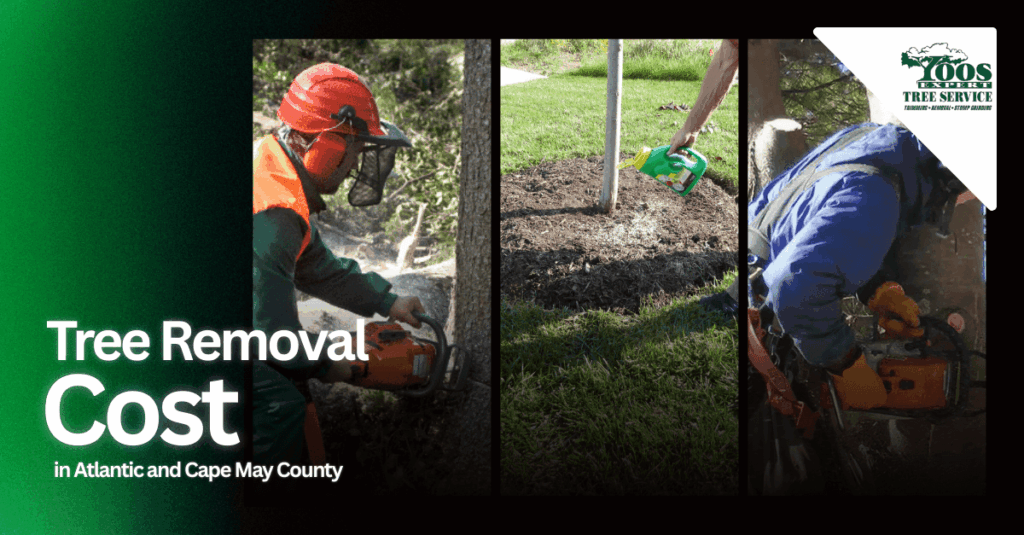
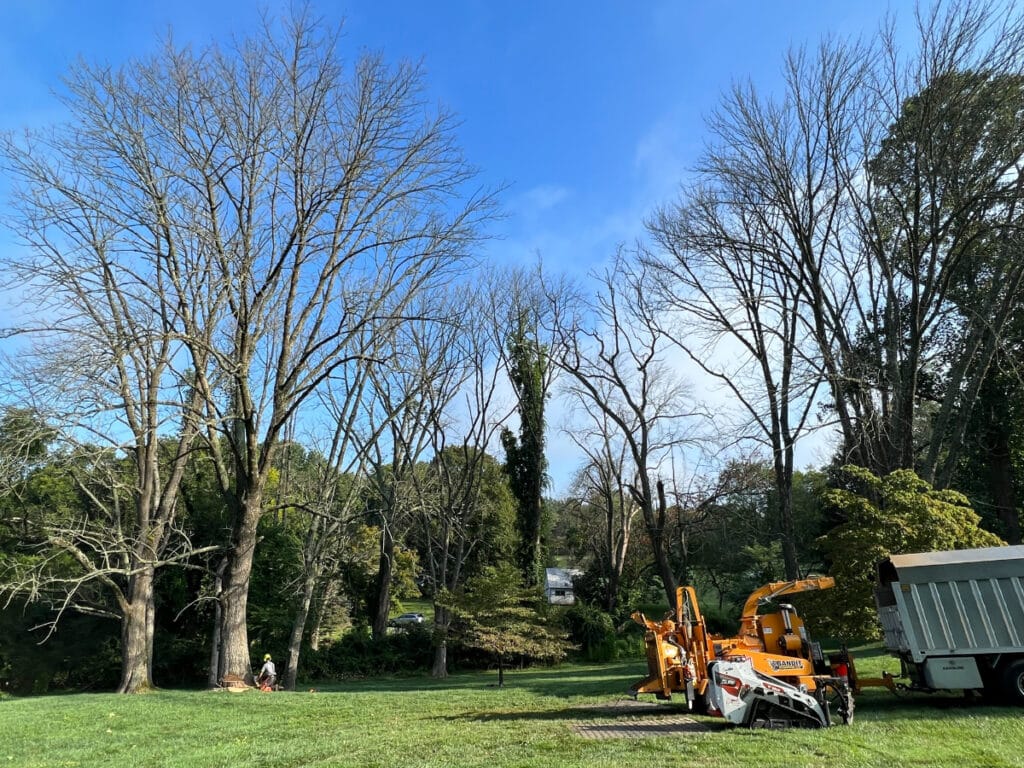
If you’re a homeowner in South Jersey—whether in Egg Harbor Township, Ocean City, Margate, or Cape May and you’re dealing with a dying or dangerous tree, one of the first things you want to know is: How much is this going to cost me?
The typical cost to remove a tree in Atlantic or Cape May County ranges from $450 to $2,000 or more. But that’s just the average.
The final price depends on a mix of factors like the tree’s size, location, condition, and what kind of equipment the job requires.
Let’s break it down.
Size matters—a lot. Here’s a rough estimate based on height:
| Tree Size | Height Range | Estimated Cost |
|---|---|---|
| Small (e.g. Dogwood) | Under 30 feet | $450 – $700 |
| Medium (e.g. Maple) | 30–60 feet | $700 – $1,200 |
| Large (e.g. Pine, Oak) | 60–80 feet | $1,000 – $1,800 |
| Extra-Large (e.g. Sycamore) | 80+ feet | $1,500 – $2,500+ |
The taller and thicker the trunk, the more time, labor, and equipment it takes to safely bring it down.
Some species like oak or black walnut also have dense wood that’s tougher to cut and haul.
Where the tree sits on your property plays a huge role. A tree standing freely in an open front yard is much easier to remove than one wedged between a house and a fence or tangled in power lines.
Difficult locations may require:
Climbers to cut it down section by section.
Crane assistance for safe overhead removal.
Traffic control if it’s near a road or sidewalk.
Utility coordination if wires are involved.
That’s why tree removals near homes, garages, sheds, pools, or public walkways tend to cost more.
Not all tree removals are done the same way. Small trees might just need a chainsaw and some ropes. But for bigger or risky jobs, companies like Yoos Tree Service use a knuckle boom crane—a hydraulic crane designed specifically for tight spaces and heavy lifting in tree work.
This equipment:
Reduces the risk of damage to property.
Speeds up removal.
Requires licensed and trained operators.
Adds to the total cost—but improves safety and precision.
Expect crane-assisted removals to start around $1,200 and go up from there, depending on complexity.
A healthy tree is more predictable to cut. A dead or decaying tree might be hollow, brittle, or leaning—making it unstable and unpredictable.
Hazardous trees can:
Collapse during removal.
Require extra rigging and safety measures.
Take longer to cut and haul.
So if your tree is diseased, split, or partially fallen after a storm, you may be looking at an extra $200–$500 added to the base cost.
A standard tree removal service usually includes:
Cutting the tree down.
Chipping and removing small limbs.
Cutting the trunk into sections.
Basic cleanup of sawdust and debris.
But not always included are:
Hauling away large logs (may cost extra).
Stump grinding (often priced separately).
Permit fees (some towns require them).
Emergency or rush service.
Tree removal may seem straightforward—cut the tree down and haul it away. But in reality, it’s far from simple.
Each tree comes with its own risks, challenges, and requirements, all of which influence the final cost of the job.
If you’re getting quotes from tree removal companies in South Jersey, understanding these key cost factors will help you know what to expect—and why prices can vary so much between jobs.
Let’s break it down.
This is the single biggest pricing factor. Simply put: the bigger the tree, the higher the cost.
Height: A 20-foot dogwood is much quicker and safer to remove than a towering 80-foot sycamore.
Trunk Diameter: A thick trunk takes longer to cut through and often requires more powerful tools and bigger crews.
Species Hardness: Some trees, like oak, hickory, and black walnut, have dense, heavy wood that’s harder on equipment and tougher to cut.
Branch Spread: Wide canopies mean more trimming and sectional removal before taking the trunk down.
| Tree Type | Height | Typical Cost Range |
|---|---|---|
| Ornamental Dogwood | Under 30 ft | $400 – $700 |
| Maple or Birch | 30–60 ft | $700 – $1,200 |
| Oak, Pine, Sycamore | 60–100 ft | $1,200 – $2,500+ |
Believe it or not, removing a dead tree can cost more than removing a live one—depending on its condition.
Here’s why:
Dead or rotting wood is brittle and can snap unpredictably.
Diseased trees may have hollow trunks or weak limbs, increasing risk.
Storm-damaged trees may be partially fallen or lodged against structures, requiring extra care and sometimes cranes.
However, if the dead tree has already lost most of its limbs or is already on the ground, it may be cheaper to remove since there’s less labor involved.
Where the tree stands on your property has a huge impact on the complexity of the job.
If it’s:
Near your house, garage, or fence
Overhanging a power line
Close to a driveway, pool, or septic system
Situated on a slope or hill
…then special removal techniques are needed. This might include:
Rope rigging
Crane-assisted removal
Sectional dismantling (cutting it down piece by piece)
All of these raise the labor intensity and time required—and therefore the price.
Can the crew easily reach your tree with their truck or crane? If not, you’re looking at more labor and potentially more cost.
Access limitations include:
Fenced-in backyards with no gate access
Narrow alleys or side yards
Hillsides or raised decks blocking ground access
Tight urban lots (especially in shore towns like Ocean City or Ventnor)
In such cases, crews may need to manually haul debris, climb the tree instead of using lifts, or bring in smaller, portable equipment—all of which increases cost.
Cutting the tree down is just the beginning. What happens to the branches, logs, sawdust, and leaves afterward?
Here’s what affects your cleanup costs:
Do you want logs cut into firewood?
Will the company haul away everything or leave it for you?
Do they chip branches and remove mulch?
Are they recycling the debris, or disposing of it at a landfill (which has dumping fees)?
Most reputable services, like Yoos Tree Service, include basic clean-up and debris removal.
But if you have special requests—like cutting the trunk into landscape logs, stacking firewood, or grinding all debris into mulch—expect to pay extra.
One of the most misunderstood parts of tree removal is the stump. After the tree is down, what’s left behind is a thick wooden base and root ball that can’t just be pulled out easily.
Removing it involves stump grinding—a separate service almost always billed independently.
| Stump Size | Grinding Cost Estimate |
|---|---|
| Small (under 12 inches) | $100 – $150 |
| Medium (12–24 inches) | $150 – $250 |
| Large or deep-rooted | $250 – $400+ |
The price depends on:
Root depth and spread
Soil type (sand vs clay)
Proximity to pipes, patios, or driveways
Whether backfilling or reseeding is needed
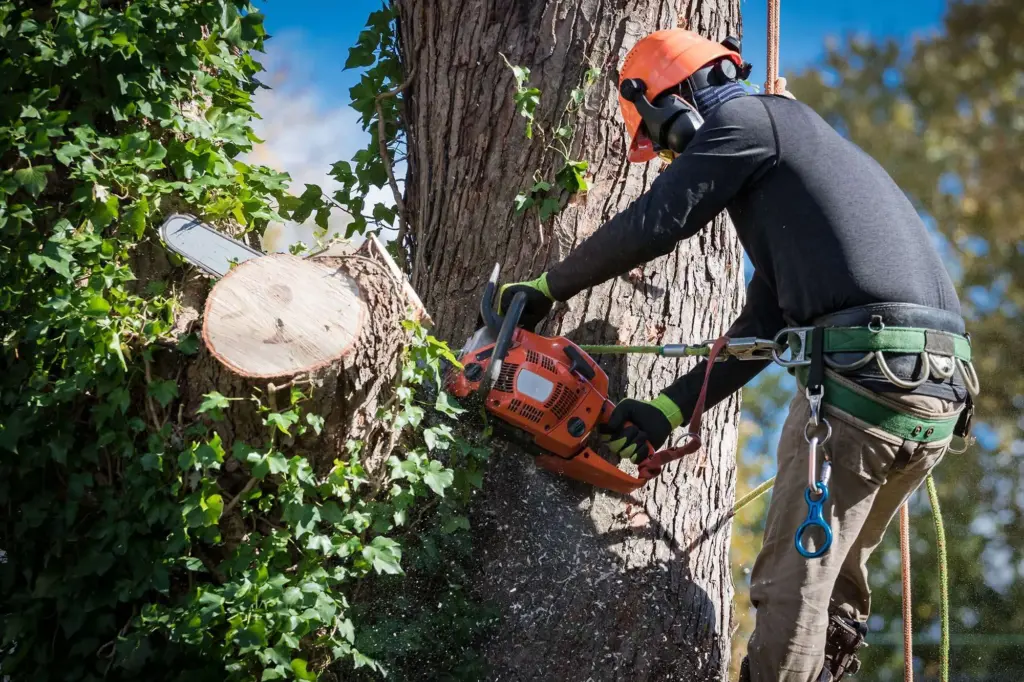
Removing a tree is only one piece of the puzzle when it comes to managing your landscape.
Most homeowners in Atlantic and Cape May County also need follow-up services—whether it’s cleaning up the leftover stump, reshaping nearby trees, or prepping land for new construction.
Let’s take a closer look at the most common tree-related services, what they involve, and how much they typically cost in South Jersey.
Once a tree is cut down, it usually leaves behind a stump—the base and roots embedded in the ground. Some people leave it, but most choose to remove it for good reason:
It’s unsightly and ruins curb appeal.
It can become a tripping hazard, especially for kids and pets.
It attracts insects and fungi like termites, carpenter ants, and mushrooms.
It can regrow, sending up new shoots around the base.
The most effective method is stump grinding—a process where a machine grinds the stump into wood chips, several inches below the surface.
This allows you to reseed with grass, install mulch, or build over the area.
Stump Grinding Costs in South Jersey:
Small stumps (under 12 inches): $100–$150
Medium stumps (12–24 inches): $150–$250
Large or deep-rooted stumps: $250–$400+
Factors that affect cost:
Stump diameter
Tree species (hardwoods are tougher)
Root depth and spread
Accessibility (tight spots cost more)
Whether clean-up and backfilling is included
Not all trees need to come down. In fact, proper pruning can keep a tree thriving for decades. If your tree is growing too close to your home, blocking sunlight, or dropping too many limbs, trimming might be all you need.
Tree trimming includes:
Removing dead or diseased branches
Thinning out overgrowth to improve sunlight and air flow
Lifting the canopy for better visibility or clearance
Shaping for aesthetics or HOA compliance
Certified arborists know exactly where and how to cut without damaging the tree’s structure or health.
Tree Trimming Prices in Atlantic & Cape May County:
Small ornamental trees: $150–$300
Medium shade trees: $300–$600
Large trees near structures: $600–$800+
Sometimes, a tree doesn’t need to be removed or trimmed—it just needs structural support. That’s where cabling and bracing come in.
If your tree is:
Splitting at the trunk
Leaning heavily
Showing weak branch unions
Damaged by wind or lightning
…an arborist can install steel cables and rigid rods in the upper canopy or at stress points. This distributes weight, supports heavy limbs, and reduces the risk of breakage during storms.
Cabling Cost Estimates:
Basic cabling system: $300–$600
Multiple cables or complex systems: $700–$1,200+
Cabling is often done on heritage trees or large, mature trees that homeowners want to preserve for shade, property value, or sentimental reasons.
Planning to build a home, pool, shed, or garden? You’ll likely need land clearing, especially if your lot is overgrown with trees, vines, brush, or debris.
Land clearing services may include:
Removing multiple trees and stumps
Clearing brush, undergrowth, or invasive plants
Leveling terrain
Hauling debris or creating burn piles
This is a heavy-duty job often requiring excavators, skid steers, and dump trucks. It’s priced by the hour, acre, or project scope.
Land Clearing Price Range:
Small residential lots (under ¼ acre): $500–$1,500
Larger parcels (¼–1 acre): $1,500–$5,000+
Full-acre clearing with tree removal and grading: $4,000–$10,000+
The final cost depends on:
Number and size of trees
Slope or terrain difficulty
Access for machinery
Debris disposal or recycling
Many reputable companies, like Yoos Tree Service, offer bundled packages for:
Tree removal + stump grinding
Trimming + storm cleanup
Multiple removals on one property
Emergency work + repair pruning
Getting everything done at once not only saves you time—it can lower the total cost by reducing equipment trips, labor duplication, and logistics.
South Jersey is no stranger to sudden storms, high winds, and coastal weather that can wreak havoc on trees.
Whether it’s a nor’easter ripping through Cape May or a summer thunderstorm knocking down limbs in Egg Harbor Township, falling trees can cause serious damage—and they rarely wait for regular business hours.
That’s where emergency tree removal services come in.
When a tree collapses onto a home, blocks a driveway, crushes a car, or threatens power lines, you need immediate, professional help.
But with that urgency comes a higher cost, and it’s important to understand why.
Emergency tree removal isn’t about a leaning tree or a dead branch you’ve been meaning to take care of for months.
These are urgent, high-risk situations that often require same-day or after-hours response.
Common emergency scenarios include:
Tree fallen on a home or garage
Blocked roads or driveways
Tree leaning dangerously after a storm
Power line entanglement
Uprooted trees with exposed root balls
Splitting trunks or cracked limbs ready to fall
In these situations, waiting even a few hours can mean the difference between a controlled removal and a dangerous collapse.
Emergency tree removal jobs are priced higher than standard removals due to:
After-hours or holiday response
Special equipment needs (e.g., cranes, bucket trucks, wood chippers)
Additional crew for safety and speed
Insurance, liability, and permitting complexity
Estimated Emergency Tree Removal Costs:
| Scenario | Estimated Cost Range |
|---|---|
| Small tree fallen in open yard | $500 – $900 |
| Medium tree on a fence or shed | $900 – $1,500 |
| Large tree on a house or structure | $1,500 – $3,500+ |
| Multiple tree removals after a storm | $2,000 – $5,000+ |
| Crane-assisted removals with road closure | $3,000 – $6,000+ |
These numbers can vary based on tree size, complexity, location, and how quickly the job must be completed.
Emergency jobs are unpredictable. A tree that’s still partially upright can shift, fall, or roll at any time. That’s why companies like Yoos Tree Service often dispatch crews with:
Knuckle boom cranes for lifting heavy tree trunks safely
Bucket trucks for elevated cutting near roofs or wires
Wood chippers to quickly clear debris
Traffic safety gear if removals happen near roads or sidewalks
This gear not only adds to the cost—it also prevents further property damage and protects the workers on-site.
In many cases, yes—but with conditions.
Insurance typically covers removal if:
The tree damages your home, garage, fence, or vehicle
The tree blocks access to your driveway or entrance
The removal is required for safety or code compliance
Insurance often won’t cover:
Removal of a fallen tree that didn’t cause damage
Trees that were already dead or diseased before falling
Cleanup of branches or debris not tied to property loss
Always call your insurance provider first and document everything with photos. Ask if they cover emergency tree removal and if they require you to use a specific vendor.
When you call a trusted company like Yoos Tree Service, you can expect:
Immediate phone response—24/7 availability, even on holidays
Fast dispatch—often within 1–3 hours depending on location
On-site safety inspection to assess risks
Rapid stabilization (e.g., temporary bracing, cutting high-risk limbs)
Full removal and debris clearing
Coordination with utility companies, if power lines are involved
Yoos has over 38 years of experience handling emergencies in towns like Mays Landing, Ventnor, Somers Point, and Cape May Point, so they’re used to acting fast in chaotic conditions.
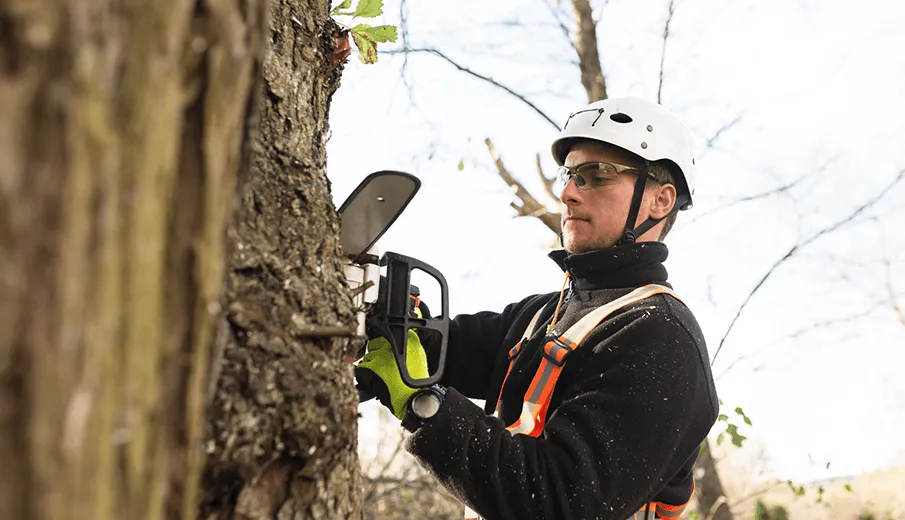
When it comes to tree work, going with a trusted local expert makes all the difference. Yoos Tree Service, based in Egg Harbor Township, has been serving Atlantic and Cape May Counties for nearly four decades. Here’s what sets them apart:
Licensed Tree Experts (#443, #722, #723)
Members of the International Society of Arboriculture (ISA)
Knuckle Boom Crane Specialists for tricky jobs
Fully insured for your protection
Family-owned and operated with deep local roots
They also serve a wide area, including Ocean City, Mays Landing, Ventnor, Margate, Cape May, Hammonton, and more.
Whether you’re a homeowner, property manager, or part of an HOA, working with a local certified team means better communication, faster service, and peace of mind.
Combine jobs: Removing more than one tree at a time often lowers the per-tree price.
Avoid peak seasons: Late winter or early spring may offer better rates.
Keep up with maintenance: Pruning early can prevent full removal later.
Hire locally: South Jersey companies know the terrain, tree species, and permit requirements.
Get a free estimate: Many local services, including Yoos, offer no-obligation quotes.
Yes, with the right equipment. Cranes and climbing crews are often used to prevent damage.
Yes, fully licensed and insured, including ISA certification and NJ licensing.
Laws can vary. Talk with your neighbor, and if needed, a certified arborist can inspect and offer a report.
DIY tree removal is dangerous and not recommended—especially near structures or power lines.
In many cases, yes. Check with your policy. Some emergency removals are reimbursable.
If you’ve got a dying, leaning, or overgrown tree, don’t ignore it. Waiting could lead to damage, injury, or higher costs.
Tree removal may seem like a big job—but with the right team, it can be smooth, safe, and even affordable.
Whether you’re in Atlantic City, Ocean View, Northfield, or Cape May, expert help is just a call away. Protect your home and landscape by working with trusted professionals.
📞 Ready to get started? Call Yoos Tree Service at (609) 927-7185 or Request a Free Estimate
Share: